
Most conversations about motherhood focus on what changes after a baby arrives. We talk about the sleepless nights, the new routines, and the responsibilities that come with caring for another human being.
I've noticed that we also tend to talk about everything around the mother.
We ask whether the baby is sleeping, whether everyone is adjusting, whether the household is functioning, and whether she's managing to keep up with everything that now needs her attention. Much less often do we ask how the mother herself is changing, not simply whether she's coping, but how becoming responsible for another life is reshaping the relationship she has with her own.
In my work with mothers, those are often the conversations that emerge.
A session might begin with a story about a toddler refusing bedtime or the exhaustion of balancing work and family life. Then, almost without realizing it, the conversation shifts. Someone pauses and says, "I don't really know who I am anymore." Or "I miss the person I used to be." Or simply, "When did I stop feeling like myself?"
This is more common than many people realize. Becoming a mother is one of life's most significant identity transitions. Anthropologist Dana Raphael described this developmental process as matrescence, recognizing that becoming a mother involves far more than caring for a newborn. Like adolescence, it can reshape how we understand ourselves, our relationships, our priorities, and our sense of identity, and more recent research continues to recognize it as a significant developmental transition that extends well beyond the early postpartum period.
I don't think mothers simply lose themselves. More often, I think we become so practiced at noticing everyone else's needs that we have fewer opportunities to notice ourselves. Over time, our attention becomes organized around caring, anticipating, remembering, and responding, until one day we realize we've become much easier to describe through the roles we carry than through the relationship we have with ourselves.
Motherhood Doesn't Just Change Your Life. It Changes Your Relationship With Yourself.

When people talk about identity after becoming a mother, they often describe it as "losing yourself." I've never found that explanation particularly satisfying because it suggests there was once a fixed version of you that simply disappeared.
What I notice more often is that motherhood changes where your attention naturally goes. The roles you take on each day begin shaping what you think about, what you remember, what you anticipate, and what feels most important. None of this happens because you're doing motherhood incorrectly. It's simply part of caring for another human being.
Many mothers find themselves becoming the person who...
| Role | What it often looks like |
|---|---|
| Remembers | Keeping track of appointments, birthdays, school events, groceries, and everyone's schedules. |
| Anticipates | Thinking several steps ahead so everyone else's needs are met before they're even spoken. |
| Regulates | Helping children, partners, or family members navigate difficult emotions while setting your own aside. |
| Organizes | Coordinating routines, responsibilities, and the invisible work that keeps daily life moving. |
| Cares | Providing comfort, encouragement, and support, often before considering what you need yourself. |
None of these roles are inherently unhealthy. They can be deeply meaningful expressions of love and care.
The challenge is that attention is one of the ways we stay connected to ourselves. When so much of our attention is directed toward caring for other people, it becomes much harder to notice what is happening within us. We may spend far more time thinking about who everyone else needs us to be than asking ourselves who we are becoming.
This isn't a personal failure. It's a common part of a significant life transition. The work isn't to become the person you were before motherhood. It's to create enough space for your relationship with yourself to continue growing alongside the many roles you now hold.
Becoming a Mother Doesn't Happen in Isolation
One of the things I've come to appreciate about motherhood is that it doesn't begin the day a child is born.
Long before many of us become mothers, we've already spent years learning what care is supposed to look like, who is expected to provide it, and what makes someone a "good" woman, partner, or parent.
Motherhood doesn't create those beliefs. It often reveals them.
I've often wondered why motherhood is described as though it begins in the delivery room.
In many ways, it begins much earlier. It begins in the homes we grew up in, the relationships we witnessed, the expectations placed on girls, and the ways we learned what love, responsibility, and sacrifice were supposed to look like. By the time many of us become mothers, we've already spent years absorbing ideas about what good caregiving should look like, often without realizing those ideas were learned rather than chosen.
That's why the questions that emerge in motherhood are often bigger than parenting itself.
| The question isn't just... | It's also... |
|---|---|
| How do I become a good mother? | What ideas about motherhood have I inherited? |
| Why do I feel guilty resting? | Who taught me that caring for myself should come last? |
| Why is asking for help so uncomfortable? | What did I learn about strength growing up? |
| Why do I feel responsible for everyone? | When did responsibility become the way I learned to love? |
| Why do I feel like I've lost myself? | How much of my identity has become organized around caring for others? |
Our answers to these questions are rarely individual. They're shaped by our families, cultures, communities, and the systems we've learned to navigate. For some of us, caregiving was modeled as sacrifice. For others, it meant always being strong, productive, or dependable. These lessons often become so familiar that they feel like personality rather than inheritance.
I don't think motherhood asks us to become someone entirely new. I think it gives many of us our first real opportunity to examine the stories we've inherited about care, worth, and responsibility, and to decide which ones still reflect the kind of parent, partner, and person we want to become.
Sometimes We Don't Lose Ourselves. We Lose Access to Ourselves.

When people say they've "lost themselves" after becoming a mother, I don't think they're describing an identity that has disappeared.
More often, I think they're describing an identity that has become harder to reach.
Attention is one of the ways we build a relationship with ourselves. It's how we notice what we're feeling, what brings us joy, what we're grieving, what we're longing for, and what matters to us. When nearly all of our attention is directed toward caring for other people, it becomes much harder to notice what is happening within us.
Over time, your days become filled with caring, planning, anticipating, remembering, and responding. None of those things are inherently negative. They're part of loving and raising a family. The challenge is that they can leave less room to hear your own thoughts, recognize your own needs, or remain connected to parts of yourself that aren't defined by caregiving.
You might find that:
You know everyone else's favorite foods but can't remember the last meal you truly enjoyed.
You can recognize when your child or partner is overwhelmed before you notice your own exhaustion.
You spend more time thinking about what everyone else needs than asking yourself what you need.
You remember everyone's appointments, schedules, and responsibilities while your own interests quietly move into the background.
You introduce yourself through the roles you carry rather than the person you are beyond them.
This isn't because you've failed to hold onto yourself. It's because caregiving often asks for our attention before it asks for our reflection.
Part of healing isn't about finding the person you used to be. It's about making enough space to remain in relationship with yourself, even as your life continues to change.
Caregiving Can Quietly Become the Way We Measure Our Worth
One of the questions I come back to often is this:
When did caring for others become the way we began measuring our own value?
For many people, it happens so gradually that it's difficult to notice.
You receive appreciation for being dependable. People describe you as the one who always has everything under control. You become the person everyone turns to. Over time, it's easy to confuse being needed with being valued.
I don't think anyone wakes up one morning and decides that their worth depends on how useful they are. More often, it's something we're quietly rewarded for over years. We become the dependable one. The responsible one. The one who always manages. Eventually, those descriptions become less about what we do and more about who we believe we have to be.
You might notice yourself:
Feeling guilty when you rest while other people still need something.
Measuring whether you've had a "good day" by how much you got done for everyone else.
Struggling to receive care because you're more comfortable giving it.
Feeling like you've failed when you can't meet everyone's expectations.
Wondering why you still feel exhausted, even when you're doing everything "right."
These experiences are rarely separate from one another. The invisible work of keeping a household running, the emotional labor of supporting the people around us, the mental load of anticipating everyone's needs, and the burnout that can follow often grow from the same underlying belief: that our worth is measured by how much we can carry.
I've found it more helpful to ask a different question.
Who might you become if your worth wasn't measured by how useful you were to everyone else?
Motherhood Can Bring Older Stories Back to the Surface

One of the things that surprises many parents is how often caring for a child changes the way they think about their own childhood.
Children have a way of asking questions we didn't know we were still carrying. Sometimes those questions arrive through ordinary moments: comforting a crying child, setting a boundary, hearing yourself repeat words you once heard growing up, or responding differently than someone once responded to you. Small moments like these can quietly reshape the way we remember our own histories.
Not because motherhood creates new memories, but because it gives us a new relationship to old ones.
As you care for your child, you may find yourself wondering why asking for comfort felt so difficult when you were younger, what messages you received about emotions, independence, or being "good," or what kinds of care came naturally in your family and what kinds were absent. You may begin asking which parts of your childhood you hope to carry forward, which parts you want to do differently, and what you're learning about yourself as you learn to care for someone else.
These reflections aren't a sign that you're doing motherhood "wrong." They're often part of becoming more aware of the relationships, beliefs, and experiences that shaped you long before you became a parent.
For some people, this brings grief for what wasn't received. For others, it brings gratitude, compassion, or a deeper appreciation for what was. Often, it brings several emotions at once.
I've found that motherhood doesn't simply ask us to raise children. It also invites many of us to revisit the stories that shaped how we learned to give and receive care.
Finding Yourself Again Isn't About Going Back

I don't think healing is about returning to the person you were before motherhood.
Life has changed, and so have you. The experiences you've had, the relationships you've built, and the responsibilities you've carried have all shaped who you are today.
We often speak about identity as though it's something we're meant to find once and then protect forever. I don't think that's how people work.
Rather than trying to recover an earlier version of yourself, perhaps the work is learning how to stay connected to who you are now with the same care and curiosity you so often extend to other people.
That might mean noticing the beliefs you've inherited about worth. It might mean questioning whether your value has become tied to how much you can carry or how much you can give. Or it might simply mean making room for parts of yourself that have grown quieter over the years, not because they disappeared, but because other parts of life quite understandably needed more of your attention.
Our relationship with ourselves isn't something we establish once and then keep unchanged. Like every meaningful relationship, it evolves as we do. Motherhood doesn't bring that relationship to an end. If anything, it offers another opportunity to meet yourself again with greater compassion and remain open to the person you're still becoming.
Frequently Asked Questions
-
Yes. Feeling like you've lost yourself after becoming a mother is a common experience. Parenthood often changes your routines, priorities, relationships, and daily responsibilities, leaving less time and attention for yourself. Feeling disconnected from who you were doesn't necessarily mean you've disappeared. It often reflects the process of adapting to a new stage of life while learning how to care for yourself alongside caring for others.
-
Matrescence is the developmental transition into motherhood. Anthropologist Dana Raphael introduced the term to describe the profound psychological, relational, physical, and identity changes that can accompany becoming a mother. Like adolescence, matrescence is a period of growth and change, and every mother's experience is different.
-
Motherhood often changes your identity because it reshapes how you spend your time, where your attention goes, and the roles you carry each day. As your responsibilities grow, it's common for other parts of your identity to receive less attention. This doesn't mean you've lost yourself. It means you're adapting to a significant life transition while continuing to grow as a person.
-
Yes. Many mothers experience guilt when prioritizing their own needs, especially if they were raised to believe that love means putting everyone else first. These beliefs are often shaped by family, culture, and the expectations placed on women and caregivers. Caring for yourself doesn't mean caring less about your family. It simply means recognizing that your needs matter too.
-
Reconnecting with yourself isn't about becoming the person you were before motherhood. It's about staying in relationship with the person you are today. That often begins by making space to notice your own thoughts, interests, needs, and values again, while recognizing that your identity can continue to evolve alongside motherhood.
-
Yes. Therapy can provide space to explore how motherhood has changed your sense of self, while making sense of the beliefs, expectations, and experiences that shape the way you care for others. Rather than helping you "get back" to who you were, therapy can support you in building a more compassionate relationship with who you are today.
You Don't Have to Figure This Out Alone

If you've been wondering where you went after becoming a mother, therapy isn't about helping you become the person you were before.
It's about creating space for your own thoughts, questions, grief, joy, uncertainty, and hopes to exist alongside everyone else's. For many mothers, it may be one of the few places where they don't have to arrive as someone's caregiver before they arrive as themselves.
As a Black & Pinay therapist and mother, Monique offers a space to explore identity, caregiving, burnout, and the stories we've inherited about what it means to love and be loved. Together, therapy becomes an opportunity to stay in relationship with yourself as you continue becoming the person you are.
If you're ready to begin that conversation, you're invited to learn more about Monique's approach or schedule a consultation.
References
Orchard, E. R., Rutherford, H. J. V., Holmes, A. J., & Jamadar, S. D. (2023). Matrescence: lifetime impact of motherhood on cognition and the brain. Trends in cognitive sciences, 27(3), 302–316. https://doi.org/10.1016/j.tics.2022.12.002
Raphael, D. (1975). Being female: Reproduction, power, and change. Mouton Publishers.
Saxbe, D. E., Rossin-Slater, M., & Goldenberg, D. (2018). The transition to motherhood as a critical window for adult health. American Psychologist, 73(9), 1190–1207. https://doi.org/10.1037/amp0000376
Stern, D. N. (1995). The motherhood constellation: A unified view of parent–infant psychotherapy. Basic Books.
Daminger, A. (2019). The cognitive dimension of household labor. American Sociological Review, 84(4), 609–633. https://doi.org/10.1177/0003122419859007
WALZER, S. (1998). Thinking about the Baby: Gender and Transitions into Parenthood. Temple University Press. http://www.jstor.org/stable/j.ctt14bs9c8
About the Author
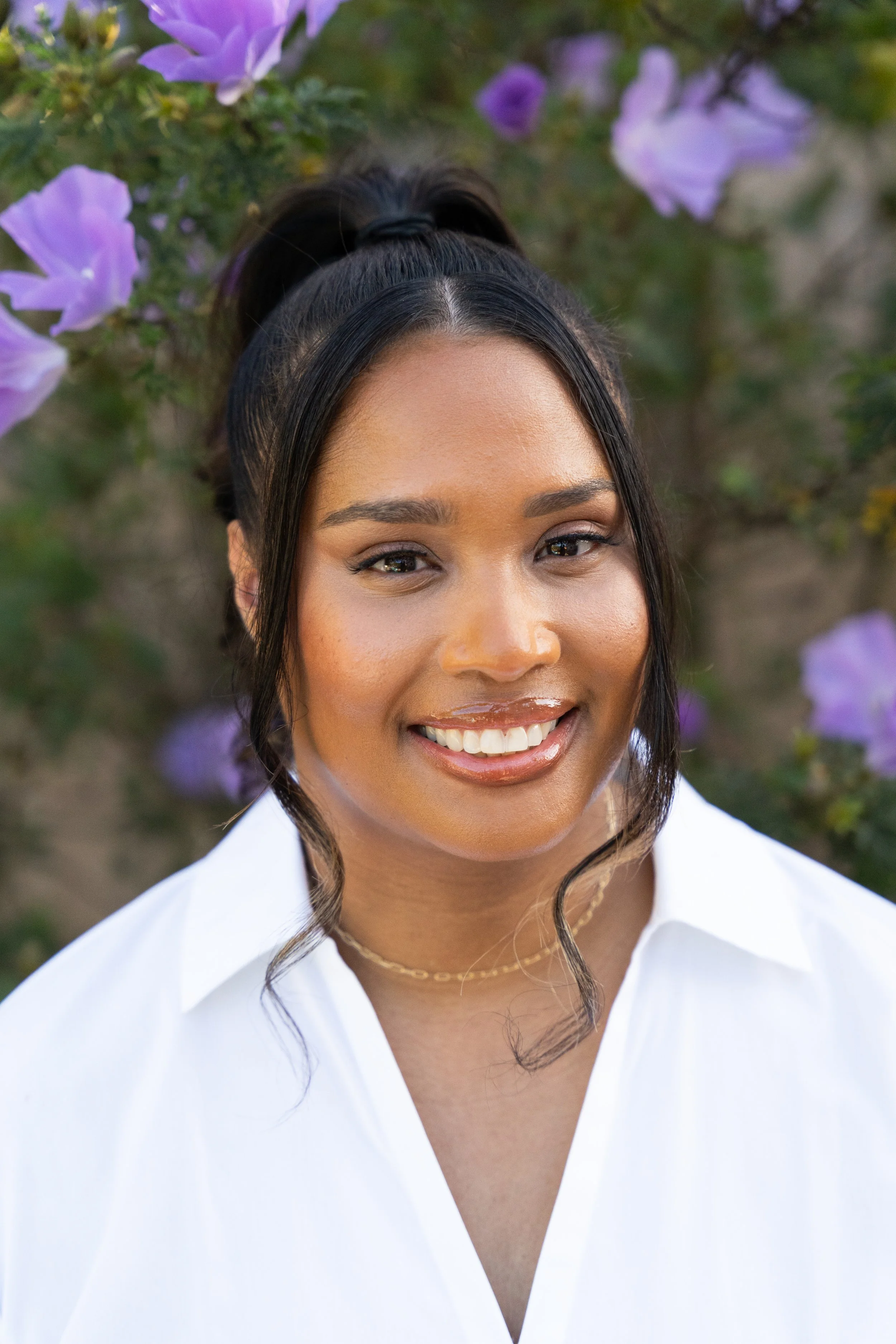
Monique Jacobo-Evans, LCSW is a licensed therapist providing EMDR, Brainspotting, and trauma therapy in Oakland, Walnut Creek, and online throughout California. As a Black & Pinay woman and mother, her work is deeply informed by both professional training and lived experience.
She specializes in supporting adults navigating trauma, caregiver burnout, anxiety, identity-based stress, and the mental load that often comes with caring for others. Her approach integrates evidence-based therapies with a relational, culturally responsive understanding of healing, helping clients build a different relationship with responsibility, rest, and themselves.